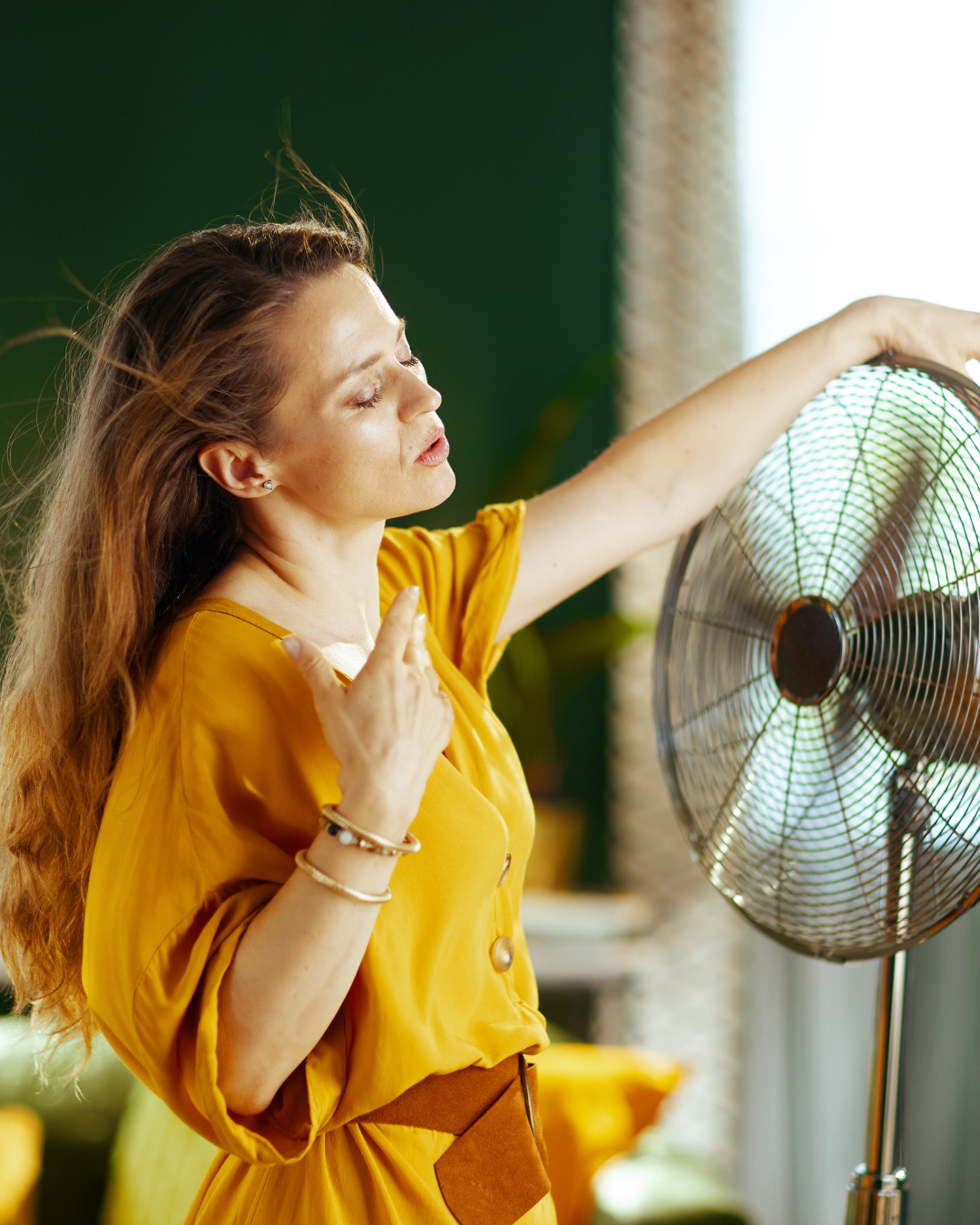
Menopause isn’t just the end of your period - it’s a powerful hormonal shift that can touch nearly every system in your body.
The symptoms that come with menopause are wide-ranging and can affect everything from your sleep to your joints. These changes stem largely from a decline in oestrogen, a hormone with powerful effects throughout the body. If you’re noticing new sensations or shifts in your health, you’re not imagining it—your body is adjusting.

What are the symptoms of menopause?
Through menopause, a woman’s reproductive glands cease in secretion of oestrogen. A wide range of symptoms can occur due to the loss of oestrogen, and will often be noticed differently between individual bodies. However, the below symptoms are well acknowledged during menopause – let us explain what they are, and why they happen!
Hot flushes and night sweats.
Your core body temperature typically remains within a set range and adjusts according to your circadian rhythm and release of hormones. Oestrogen is considered a strong neuromodulator throughout your central nervous system – where your core body temperature is regulated. Therefore, a decline in oestrogen disrupts your thermostatic homeostasis thus causing exaggerated heat loss responses like hot flushes. Oestrogen also plays a role in vasodilation of peripheral blood vessels, which explains the red flushes you may notice throughout your skin.
Mood changes, including anxiety, depression, and irritability.
Oestrogen affects mood-regulating centres in the brain, helping to produce serotonin and noradrenaline response which has an anti-depressant and anti-anxiety effect. Areas in the brain that predominantly contribute to our mood are the amygdala, hippocampus and hypothalamus. These structures have an abundance of oestrogen receptors, and when there is less oestrogen, these receptors are less active thus, reducing the production of feel good, happy hormones and promoting depressive and anxiety mood disorders.
Sleep disturbances.
The typical symptoms of sleep disorders menopausal women report include difficulty falling asleep, staying asleep/ frequent waking and or early morning waking. Oestrogen acts to metabolise wakeful hormones; noradrenaline, serotonin and acetylcholine neurotransmitters thus, promote sleepiness. As we mentioned above, oestrogen also acts to regulate your core body temperature, promoting lower body temperatures which is vital for falling and staying asleep. So, poor sleep as a menopause occurs due to a range of factors here: both an impacted circadian rhythm, and difficulty falling and staying comfortable and asleep during hot bodily temperatures.
Urinary changes, including urgency and overactive bladder (OAB)
Overactive bladder has been definitively linked to menopause – while explanations are still being explored. Some believe the link between an overactive bladder could also be through poor sleep: tossing and turning at night can have an excitatory effect on your bladder which can increase your that sense of urgency, and urinary frequency with little output. However, given oestrogen has a neuroprotective function, a decline may alter the nervous system excitability – which could also affect our bladder habits. Compounding this, perineal tissue weakness could contribute to increasing urgency as your muscular support is considered weaker than previous life stages, thus a woman’s ability to hold and maintain continence could become vulnerable.
Joint and muscle aches.
Oestrogen loss impacts connective tissue hydration and joint resilience. Soft tissue structures – including connective tissues, fascia, ligaments, tendons and even bones – can become more brittle in the absence of oestrogen. As a result, a menopausal woman is subject to tissue dehydration, altered force loading patterns, resulting in reduced tissue extensibility which can predispose them to generalised tendo-ligamentous injuries and movement restrictions.
Genitourinary syndrome of menopause.
This fancy term generally describes physical changes that affect the vulva, vagina, urethra, and bladder during and after menopause – leaving the tissues thinner, drier, less elastic and more fragile. We’ll cover this syndrome specifically in the next blog!
What menopause does to your body?
Oestrogen is more than a reproductive hormone. It acts as a neuromodulator, supports tissue integrity, and regulates many core functions including sleep, mood, and bladder control. When levels decline:
Temperature control becomes erratic, leading to hot flushes.
Neurotransmitter function (like serotonin) drops, impacting mood and sleep.
Connective tissue weakens, affecting mobility and increasing injury risk.
Urinary symptoms emerge due to weakened pelvic support and altered nerve signalling.
Is it possible to experience menopause with no symptoms?
Yes, some women experience menopause with minimal or no noticeable symptoms. Every body responds differently to hormonal changes.
While hot flushes, mood swings, and sleep issues are common, the intensity and presence of symptoms vary greatly from person to person. Genetics, underlying health, stress levels, and lifestyle factors like regular exercise and balanced nutrition may influence how smoothly your body adapts to hormonal changes. For those who do experience symptoms, they may come and go in cycles, or only appear mildly.
Will menopause symptoms go away?
Many menopause symptoms—especially the more disruptive ones like hot flushes, night sweats, and mood changes—tend to ease over time. This is typically during the early postmenopausal years, as your body finds a new hormonal balance.
However, not all symptoms resolve completely. Some, such as joint stiffness, vaginal dryness, or bladder sensitivity, may persist or evolve with age. That said, there are many effective ways to manage these symptoms – and your pelvic physiotherapist can greatly support you with this!
Does menopause impact my sexual health?
Yes, menopause can significantly affect your sexual health—but support and solutions are available. Lower oestrogen levels may lead to:
Vaginal dryness and thinning of the vaginal tissues, making sex feel uncomfortable or even painful.
Reduced natural lubrication, which may affect desire and arousal.
Decreased libido caused by hormonal shifts or compounded by sleep problems, fatigue, or mood changes.
It’s important to know that these changes are common, not permanent, and nothing to be ashamed of. Vaginal moisturisers, lubricants, local oestrogen therapies, pelvic floor physiotherapy, and open, supportive conversations with your partner or health professional can all help restore comfort and confidence in your sexual wellbeing.
Other Blogs in the Menopause Series
Deep dive into education written by our pelvic physiotherapist, Shauna, all about the menopause – including symptoms, treatment & understanding the range of associated conditions.


Do you want to learn more about pelvic health, specialised to your symptoms?
