What is Prolapse and How Do I Know if I Have One?
Prepare Yourself with Knowledge

Understanding Pelvic Organ Prolapses
Let’s start by quickly discussing our pelvic anatomy. If you’ve read our blog “Understanding Your Pelvic Floor” a lot of this should be a review, and if you haven’t you may want to check it out here.
The bladder, bowel and uterus are known as our pelvic organs as they live within our pelvic cavity. The pelvic organs are suspended high in the pelvis by strong ligaments which make up the passive component of our pelvic floor. We also have the active component of our pelvic floor, which are the large group of muscles that sit below our pelvic organs providing upwards support.
A pelvic organ prolapse (POP) is the downwards displacement of one or more of the pelvic organs (bladder, bowel, or uterus) resulting in said organs sitting lower in the vaginal canal. This occurs due to lengthening/damage of the pelvic ligaments and fascia (passive component) and/or weakness of the pelvic floor muscles (active component).
Lengthening/damage of your pelvic ligaments and fascia happens slowly over time (think wrinkles as we get older!) but is at a higher risk with things like pregnancy, vaginal delivery (especially with a prolonged pushing stage), chronic constipation and chronic respiratory conditions.
Sounds scary – but do you know POP is very common? The Continence Foundation of Australia in 2021 stated that 1 in 2 women will experience prolapse at some point in their lives. HOWEVER – using the classification system that the medical profession currently uses, a “stage 1” prolapse, is actually NORMAL. We aren’t all stiff and rigid inside; we need a bit of movement to help us absorb forces. So, if you have a small amount of movement that’s still inside the vagina, we would say that’s absolutely normal looking! Unless you’re feeling symptomatic.

Understand Your Pelvic Floor!
Need a refresher, or interested in reading more?Grab a coffee, and explore the blog below!
The most common symptoms we see associated with POP are:
-
Heaviness, dragging or bulging sensation in the vagina (often made worse by long periods of standing, exercise of lifting)
-
Lower back or abdominal discomfort
-
Changes in bladder or bowel habits (eg difficulty emptying the bladder or bowel easily)
-
Discomfort during intercourse
Sound Familiar?
If these symptoms ring a bell to you, and you would like to consult an expert to get yourself checked out – we would welcome you! Getting checked is always the first & safest step for yourself.

Types of Pelvic Organ Prolapse
The type of prolapse is defined according to which of the pelvic organs is involved.
In a uterine prolapse, the uterus descends into the vagina.
In an anterior wall prolapse, the bladder descends and creates a bulge into the front wall of the vagina. This is sometimes called a bladder prolapse or cystocele.
In a posterior wall prolapse, the rectum drops down and creates a bulge into the back wall of the vagina. This is sometimes called a rectal prolapse or rectocele.
Following a detailed medical history, POP can be diagnosed via an examination with your pelvic physiotherapist, GP, or gynaecologist.

Types of Pelvic Organ Prolapse
Any of your pelvic organs can descend – including your uterus, rectum or bladder. The prolapse is defined according to which of the pelvic organ/s is involved.
Treatment Options
It is important to know that as physiotherapists, our role is not to “cure” an anatomical prolapse – once the passive support to our pelvic organs are lengthened/damaged we cannot rehab it like we would a muscle (as it is not contractile). But fear not – there is lots of great work we can do to markedly reduce your symptoms (or even make you symptom free!) and stop the prolapse worsening over time. Hooray!
Treatment for prolapse ranges widely from person to person, but may include any combination of the following:
- Education and understanding about your condition (so it doesn’t seem as scary as it sounds!)
- Pelvic floor muscle training (to make sure your muscles are providing dynamic support upwards for the organs during movements, coughing, exercise etc.)
- Optimising breathing patterns (to reduce the pressure in our abdomen)
- Activity modification and exercise advice (exercise is wonderful and we want you to feel confident exercising with a prolapse)
- Managing constipation (to make sure we’re not straining to pass – which will add a lot of extra downwards pressure in our abdomen)
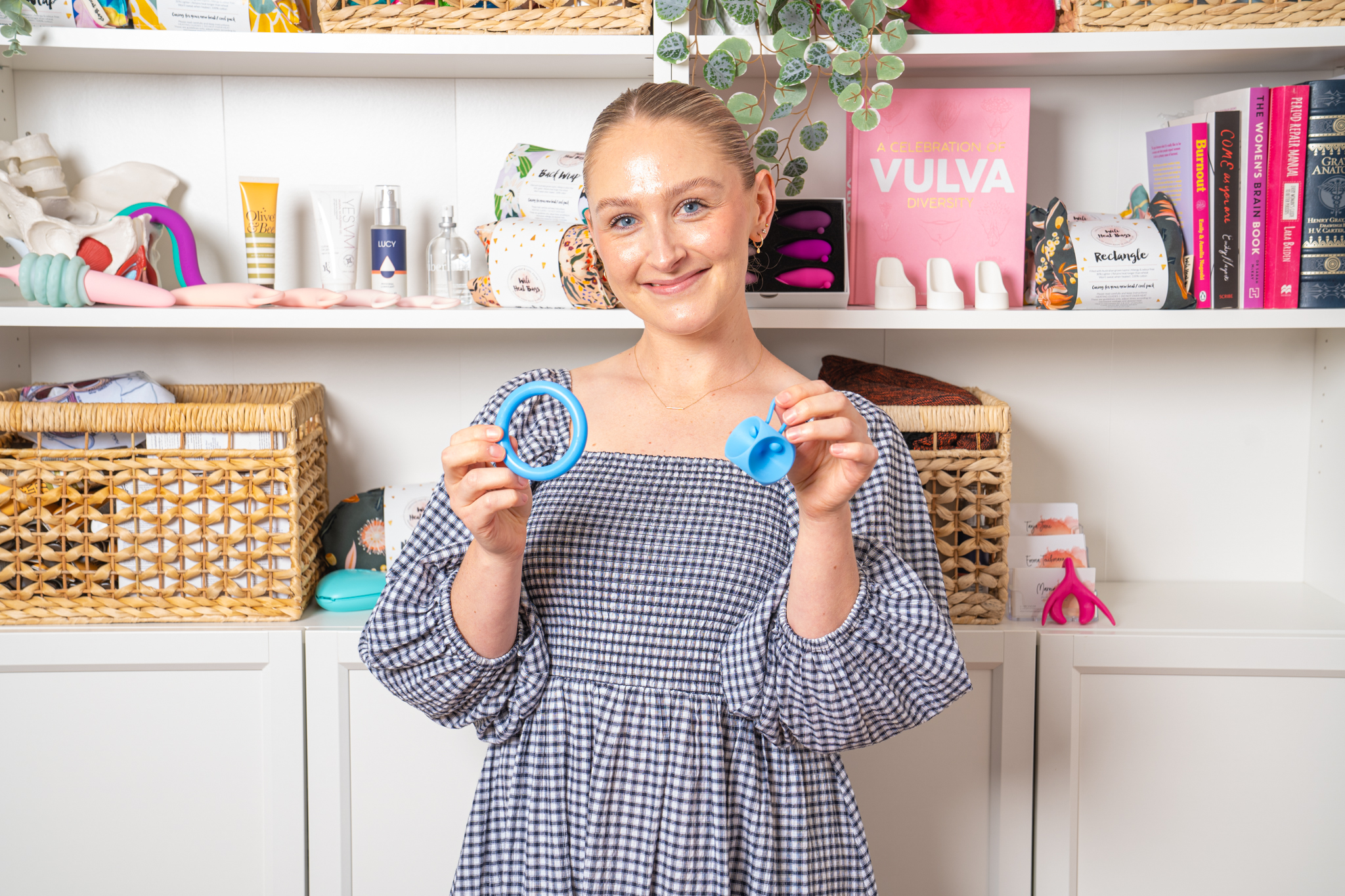
- Internal support with a pessary (think a sports bra for your organs!)
- Referral to your GP to discuss the use of topical oestrogen (oestrogen is responsible for making our vulvovaginal tissues hydrated and flexible – so in the postnatal or postmenopausal period when oestrogen is low, your tissues can be a little more sensitive)
- Referral for a surgical consult in more severe and non-responding cases
We understand that the symptoms associated with prolapse can be quite stressful, but as you can see from the list above there is so much that can be done to improve your symptoms. If you are concerned you might have prolapse, book in to see one a Pelvic Health Physiotherapist today.


