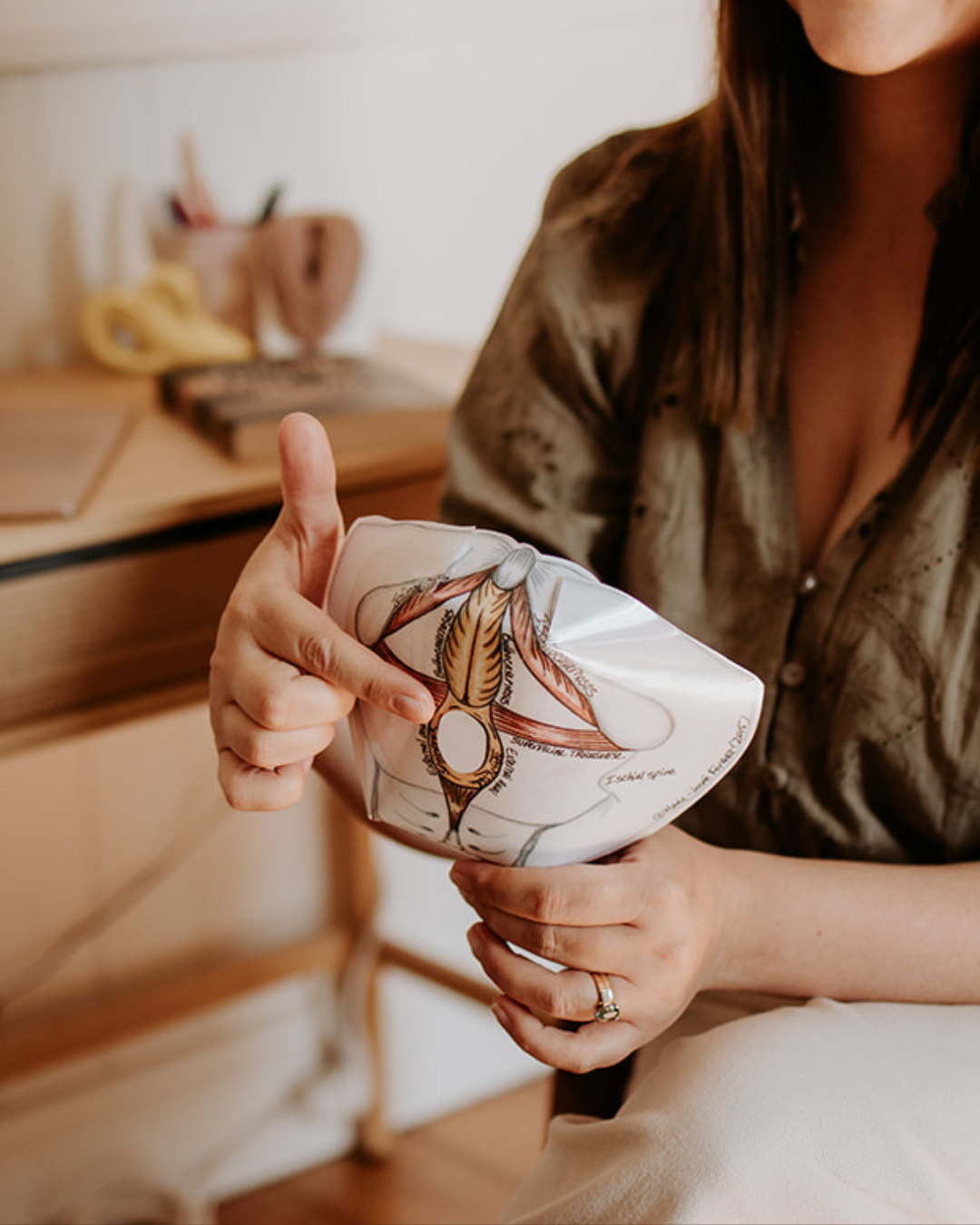
BUTT STUFF SERIES WITH AMELIA
PART 1: THE ANUS, RECTUM & URGE
Ever wondered how your body knows when it’s time to poo — and how it knows the difference between wind and stool? 🍑
Your rectum and anal sphincters are constantly working together to help you store stool, sense when something has arrived, decide whether it’s wind or poo, and empty your bowels when the time is right. Understanding how these structures work can help us make sense of symptoms such as faecal urgency, constipation, difficulty emptying your bowels, rectal or anal pain, faecal incontinence, haemorrhoids, anal fissures, rectal prolapse and coccyx pain.
In this first blog in our “Butt Stuff” series, we’re breaking down the anatomy behind how your body stores, senses and empties your bowels. Let’s meet the two important players: your rectum and anal sphincters.
What does the rectum actually do?
The rectum is the final section of the large bowel and acts as a storage area for stool before it leaves the body. It sits just above the anal canal, which is surrounded by the anal sphincter muscles.
The walls of the rectum contain specialised sensory nerves that detect stretching and send signals to the brain. As stool or gas enters the rectum, the walls stretch and these nerves detect the change in pressure.
This creates the sensation that you may need to open your bowels. Generally, the more the rectum stretches, the stronger and more urgent the sensation becomes.
What are the anal sphincters and what do they do?
There are two rings of muscle surrounding the anus: the internal anal sphincter (IAS) and the external anal sphincter (EAS). Although they sit next to each other, they have very different jobs.
The internal anal sphincter is made of smooth muscle, meaning it works automatically and isn’t under our conscious control. When the rectum detects stool or gas, the IAS briefly relaxes, allowing a small amount of rectal contents to move into the upper part of the anal canal.
The external anal sphincter helps us stay in control. If it isn’t an appropriate time to use the toilet or pass wind, the EAS contracts to help keep the anus closed. When you’re ready to open your bowels, it needs to relax so stool can pass through the anal canal.
How does your body know if it's wind or poo?
This is where the rectum and anal sphincters really work as a team.
When stool or gas enters the rectum, the rectal walls stretch and sensory nerves send information to your brain. The internal anal sphincter then briefly relaxes, allowing a small amount of the rectal contents into the anal canal.
Sensory receptors in the anal canal help your brain work out whether the contents are wind, stool or a combination of both. This process is known as the rectoanal inhibitory reflex, or the “sampling reflex.”
Your external anal sphincter can then help you decide what happens next. If it’s not the right time to pass something, it contracts to keep the anus closed. When you’re ready to go, it relaxes to allow the stool to pass.
How do your rectum and anal sphincters work together?
Your bowel doesn’t rely on one muscle or one signal. The rectum and anal sphincters are constantly communicating and coordinating to help you:
+ Store stool
+ Sense when stool or gas has arrived
+ Tell the difference between wind and stool
+ Delay emptying when necessary
+ Empty your bowels when the time is right
This coordination is what allows us to remain continent while also knowing when it is safe and appropriate to pass wind or open our bowels. When any part of this system isn’t working as it should, you may experience symptoms such as urgency, constipation, difficulty emptying, leakage or other bowel concerns.
Why is understanding your bowel anatomy important?
Understanding how your rectum and anal sphincters work is an important part of understanding bowel symptoms.
If you’re experiencing faecal urgency, constipation, difficulty emptying your bowels, rectal or anal pain, faecal incontinence, recurrent haemorrhoids, anal fissures, rectal prolapse or coccyx pain, there can be a number of different contributing factors.
A pelvic health physiotherapist can help assess how the muscles and mechanisms involved in bowel function are working and help you understand what might be contributing to your symptoms.
This is just the beginning of our “Butt Stuff” series — in the next blog, we’ll explore what happens when you feel the urge to poo and ignore it.
Other Blogs in the Butt Stuff Series
Deep dive into education written by our pelvic physiotherapist, Amelia, all about the butt stuff – including the anatomy of your bowels, and factors involved with treating constipation, incomplete emptying, and faecal incontinence, leaking & urgency.

Ready to love your peach again?
Let us listen to your story and find the best solution for YOU!
Address
Northside - The Grange
The Healthy Peach Physio
220 Days Road
Southside - Holland Park
Inside Ash & Bloom Psychology
970 Logan Rd
Connect
Ph: +61 447 314 284
Fax: (07) 3054 0546
E: info@thehealthypeachphysio.com.au
