
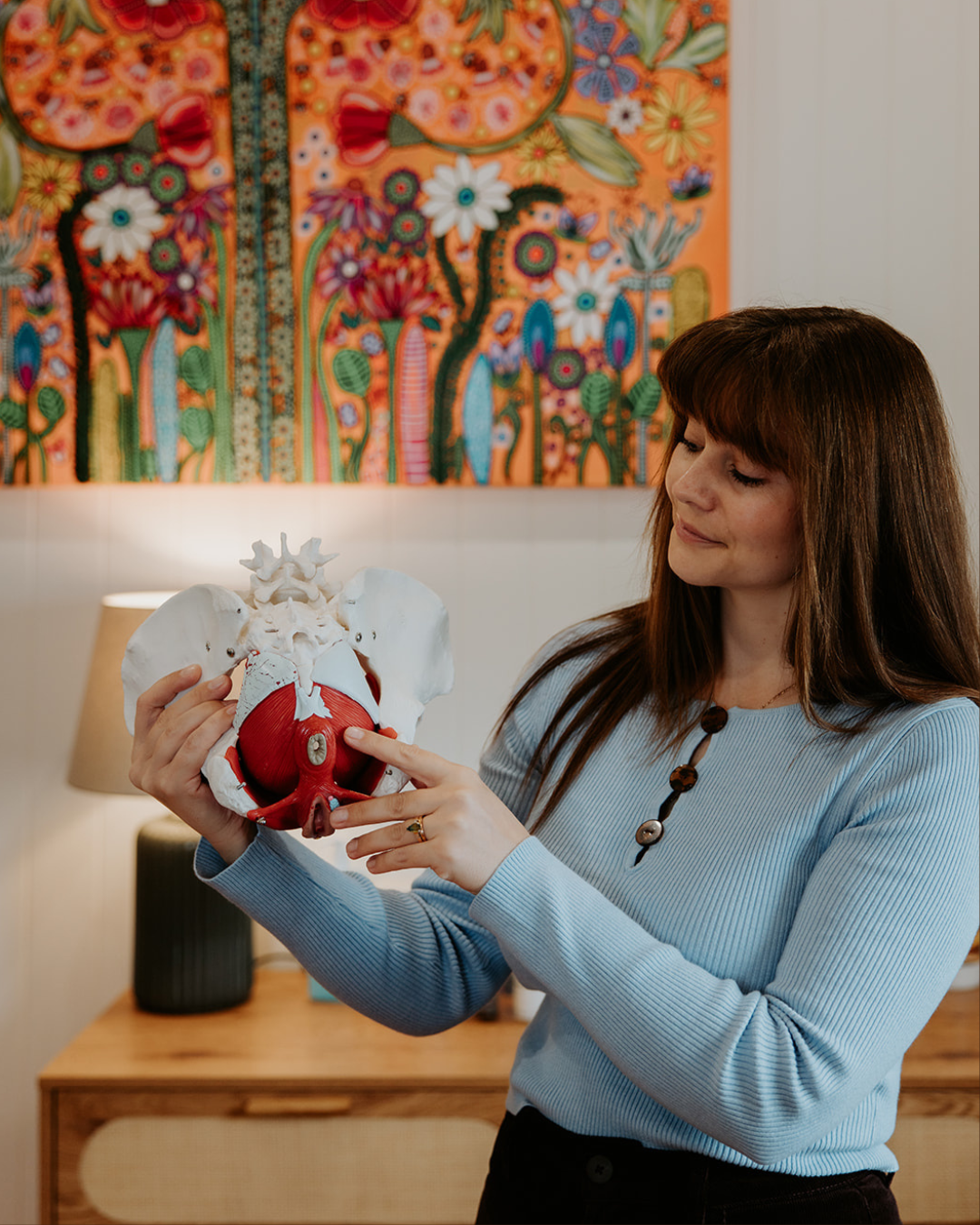
BUTT STUFF SERIES WITH AMELIA
PART 3: MUSCLES, RECTUM & INCOMPLETE BOWEL EMPTYING
Ever felt like your poo is stuck, you’re straining too much, or you just can’t seem to empty completely?
Difficulty emptying your bowels is more common than many people realise, particularly for people experiencing chronic constipation. There are several possible reasons, including stool consistency, prolapse, rectal sensation and how well your abdominal muscles, pelvic floor and anal sphincters coordinate during a bowel motion.
In this blog, we’re focusing on two important pieces of the puzzle: dyssynergic defecation and toilet positioning, including the role of the puborectalis muscle and anorectal angle.
What do we mean by incomplete bowel emptying, and what are the signs?
Incomplete bowel emptying is the feeling that you still have stool left in your rectum after you’ve opened your bowels. It can feel like your bowel motion is “stuck”, you haven’t completely emptied, or you need to return to the toilet again soon after going. Other signs can include excessive straining, difficulty getting a bowel motion started, spending a long time on the toilet, feeling blocked or obstructed, or needing to use your fingers to help empty your bowels.
There are several possible reasons this can happen. Your stool may be too hard, too soft or too bulky, or there may be a structural issue such as pelvic organ prolapse, rectal prolapse or rectal intussusception. Your rectal sensation can also be reduced, making it harder to recognise when you’re ready to empty.
For some people, the problem is how the muscles are coordinating during a bowel motion. Your abdominal muscles, pelvic floor and anal sphincters all need to work together to allow stool to pass. When they don’t coordinate effectively, this is known as dyssynergic defecation.
Difficulty emptying is particularly common in people with constipation. Research suggests that around one-third of people with chronic constipation have an evacuation disorder, meaning there is an issue with how they are trying to empty their bowel.
What is the anorectal angle and why does it matter?
The anorectal angle is the natural bend between the rectum and anal canal. This bend forms part of your continence mechanism, helping keep stool inside while you’re standing, walking around and going about your day.
When it’s time to open your bowels, the angle should widen and become straighter, creating a clearer pathway for stool to move from the rectum into the anal canal.
This is one reason we love a footstool! When your knees are slightly higher than your hips, like in a squatting position, the anorectal angle can straighten and may make bowel emptying easier.
What does the puborectalis muscle do?
The puborectalis is a deep pelvic floor muscle that forms a sling around the junction between the rectum and anal canal. When you’re not using the toilet, it maintains gentle tension around the rectum. This helps preserve the anorectal angle and supports bowel control.
When it’s time to empty your bowels, the puborectalis needs to relax and lengthen under control. As it lengthens, the anorectal angle widens and the pathway out of the rectum becomes straighter.
You also need to maintain this lengthened position while breathing and creating gentle pressure through your abdomen. If the muscle tightens again when you breathe or bear down, the pathway can become more closed and stool may be harder to pass.
What happens if the puborectalis muscle doesn’t relax?
For some people, the puborectalis doesn’t relax or lengthen adequately during a bowel motion. It may remain tense, shorten or tighten further when they try to push. Some people can initially lengthen the muscle but have difficulty maintaining that position while breathing and generating abdominal pressure. This is sometimes described as pelvic floor dyssynergia or a defecatory coordination disorder.
When the puborectalis remains shortened or tightens again, the anorectal angle may stay more closed. This creates extra resistance and can make stool more difficult to pass — a bit like trying to push poo through a kinked garden hose.
You might experience excessive straining, difficulty starting a bowel motion, a feeling of being blocked, spending a long time on the toilet, feeling like you haven’t completely emptied, needing to return to the toilet several times, or using your fingers to help empty your bowels.
These symptoms can have other causes too, so an individual assessment is important.
How can toilet position help with constipation and difficult bowel emptying?
Your position on the toilet can influence how easily you empty your bowels. Try placing your feet on a small stool so your knees sit slightly higher than your hips, with your feet supported rather than dangling.
Lean forward slightly and rest your elbows on your thighs. Allow your abdomen, anus and pelvic floor to soften, and focus on breathing rather than holding your breath. As you create gentle abdominal pressure, try to maintain the feeling of your pelvic floor lengthening and lowering.
Avoid forceful or prolonged straining. A footstool may make bowel emptying easier for some people, but it won’t correct every cause of constipation or difficulty emptying your bowels.
Peachy Tip: Elevate the Feet! 🍑
Place your feet on a small stool so your knees sit slightly higher than your hips. Lean forward and allow your abdomen, anus and pelvic floor to soften.
As you breathe, imagine your pelvic floor gently widening and lowering. Try to maintain this position as you create gentle abdominal pressure, rather than holding your breath or forcefully straining.
If you’re still straining or feeling blocked despite changing your position and breathing, there may be another contributing factor that needs to be assessed.
If you regularly strain, feel blocked or never feel completely empty after opening your bowels, a pelvic floor assessment may help identify what is contributing to your symptoms. Difficulty emptying can be related to pelvic floor coordination, stool consistency, rectal sensation, prolapse or other bowel conditions. Understanding what is contributing to your bowel function is often the first step towards making bowel motions easier!
Other Blogs in the Butt Stuff Series
Deep dive into education written by our pelvic physiotherapist, Amelia, all about the butt stuff – including the anatomy of your bowels, and factors involved with treating constipation, incomplete emptying, and faecal incontinence, leaking & urgency.

Prolapse & Bowel Function: Can Prolapse Make It Hard to Empty Your Bowels?

Why Is It So Hard to Empty My Bowels Completely?


Ready to love your peach again?
Let us listen to your story and find the best solution for YOU!
Address
Northside - The Grange
The Healthy Peach Physio
220 Days Road
Southside - Holland Park
Inside Ash & Bloom Psychology
970 Logan Rd
Connect
Ph: +61 447 314 284
Fax: (07) 3054 0546
E: info@thehealthypeachphysio.com.au
